How to Pack a Cabin Weekend Without Overpacking
July 23, 2026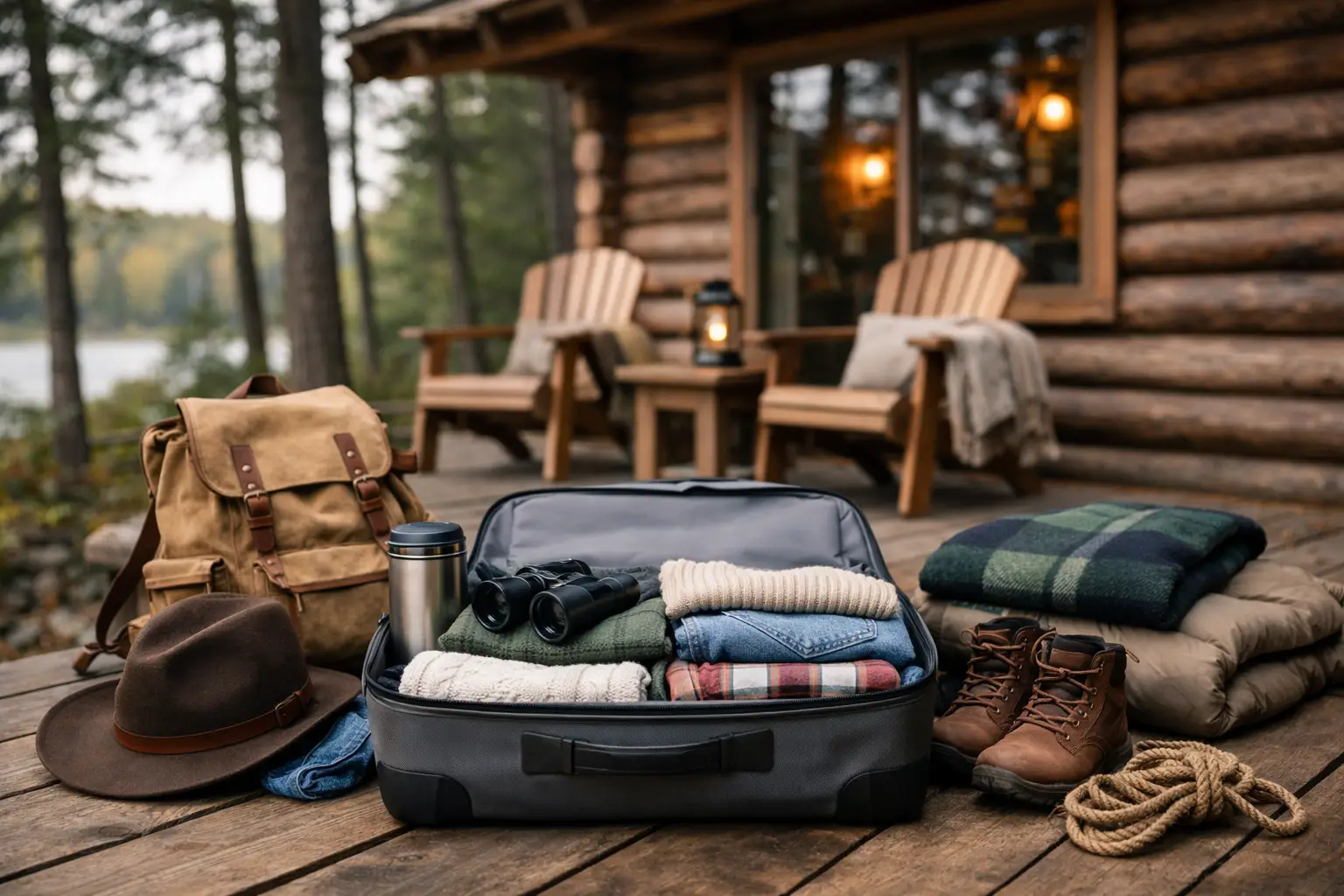
The best cabin weekends start before you leave home. Knowing how to pack a cabin weekend means bringing what makes the trip feel easy: dry trail clothes, something cozy for the hot tub, and a few familiar comforts for slow mornings in the woods. It does not mean filling the car until there is no room for groceries, firewood, or the dog.
A stay in Hocking Hills can hold a lot in two or three days. You may hike to Ash Cave in the morning, play a casual game of pickleball in the afternoon, and settle beside a fire after dark. Pack for those real moments, not for every possible version of the weather or every outfit you might wear at home.
Start with your cabin, not a generic packing list
Before making a list, look closely at what your rental already provides. A cabin with a full kitchen changes the food you need to bring. A place with a hot tub, outdoor shower, streaming access, decks, and a fire pit changes what you will actually use during your stay.
This is where many people overpack. They bring extra cookware, bulky entertainment, and piles of towels without checking first. A better approach is to make a short list of the amenities you plan to enjoy, then pack only the items that support them. If you are staying at Majestic Woods Cabins, for example, the on-site recreation can make it easy to leave board games and extra sports gear at home.
Your trip also shapes the list. A couples getaway may call for simple meals, books, and a favorite bottle of wine. A small family weekend may need trail snacks, card games, and layers for kids. Friends planning to hike, cook, and use the hot tub will likely benefit from a shared grocery plan before anyone starts tossing duplicate items in the car.
Pack clothes in small, useful layers
Wooded cabins invite a relaxed wardrobe. You do not need a separate outfit for every hour, but you do need clothing that can move between a cool morning deck, a warm afternoon trail, and a chilly evening by the fire.
For most weekend stays, choose two comfortable daytime outfits, one warmer layer, sleepwear, underwear and socks, and one set of clothes you would not mind getting dusty or smoky. Add a light rain jacket when the forecast looks unsettled. Ohio weather can shift quickly, especially when you are spending time outside.
Shoes matter more than extra clothes. Bring supportive walking or hiking shoes for trails, easy slip-on shoes for stepping onto the deck or taking the dog out, and sandals for the hot tub or outdoor shower. If rain is expected, waterproof footwear is worth the space. Muddy sneakers are less of a problem when you have a second pair for relaxing at the cabin.
Do not forget hot-tub and fire-pit basics
A swimsuit is the obvious one, but a small tote with a few extras makes hot-tub time more comfortable. Pack a cover-up or robe, sandals, hair ties, and a bag for damp clothing. If you wear contacts, consider bringing glasses for the evening.
For the fire pit, bring a warm sweatshirt or jacket and clothing that can pick up the scent of wood smoke. Many guests also appreciate a flashlight, even if they plan to use a phone light. It is easier to move safely between the cabin, deck, dog run, and fire pit after sunset with both hands free.
Plan food around the weekend you want
Cabin food should feel like part of the getaway, not a second job. The trick is to plan a few meals that are simple to cook and easy to clean up. Think breakfast sandwiches, tacos, grilled favorites, pasta, soup, or a snack board that can become lunch after a long hike.
Start with the timing of your arrival. If you will check in late, bring a ready-to-eat dinner or pick up something on the drive. A cabin kitchen is a gift after a full day outdoors, but no one wants to start chopping vegetables at 9 p.m. because they packed ingredients without a plan.
For a two-night stay, most groups need one easy arrival meal, two breakfasts, one lunch, one shared dinner, trail snacks, drinks, and one treat for the fire. Keep the grocery list focused. A few good ingredients beat a cooler crowded with food that comes home untouched.
If several people are traveling together, divide food by category before departure. One person can handle breakfast, another can bring dinner supplies, and someone else can bring snacks and drinks. This prevents the classic cabin-weekend problem of six bags of chips and no coffee filters.
Bring a trail bag that is ready to grab
Hocking Hills days are better when you can head out without searching for small essentials. Pack one daypack before you leave, then replenish it as needed. Include water bottles, easy snacks, sunscreen, bug spray, tissues, a small first-aid kit, portable phone power, and a light rain layer.
You may not use every item on every trail. That is fine. The point is to keep the essentials together so a spontaneous morning hike does not become a 20-minute scramble through luggage.
A printed reservation confirmation and a downloaded map can be useful when service is spotty. You do not need to pack for an expedition, but a little preparation gives you more freedom to enjoy the scenery instead of watching your phone battery disappear.
How to pack a cabin weekend with a dog
A pet-friendly getaway feels more relaxing when your dog has familiar items from home. Bring food, bowls, treats, a leash, waste bags, any medication, and a bed or blanket. Even a dog that loves new places may settle faster with a familiar scent nearby.
Add an old towel for muddy paws and a long lead if you plan to spend time outside in areas where a leash is needed. If your cabin has a dedicated dog run, you can also bring a favorite toy for a little playtime while you unwind nearby.
Consider your dog’s usual routine. Pack enough food for the stay plus an extra meal, and keep medications in an easy-to-reach bag rather than buried under luggage. A cabin weekend should feel like a break for pets, too, not a disruption to their comfort.
Leave room in the car and in the schedule
The most useful packing tip is to stop before the car is full. Leave space for groceries, wet shoes, a souvenir from a local shop, or simply the relief of not digging through packed bags every time you need a sweatshirt.
It also helps to leave room in the itinerary. You may arrive planning a packed weekend of trails and attractions, then find that coffee on the deck, a round of disc golf, or an hour in the hot tub is exactly what everyone needs. That is not wasted time. It is the reason a cabin stay feels different from a rushed hotel trip.
Pack with comfort, weather, and the people traveling with you in mind, then let the woods take care of the rest. The best item you bring may be the willingness to slow down once you get there.
