
When Is Hocking Hills Quietest? Best Times to Go
October 5, 2026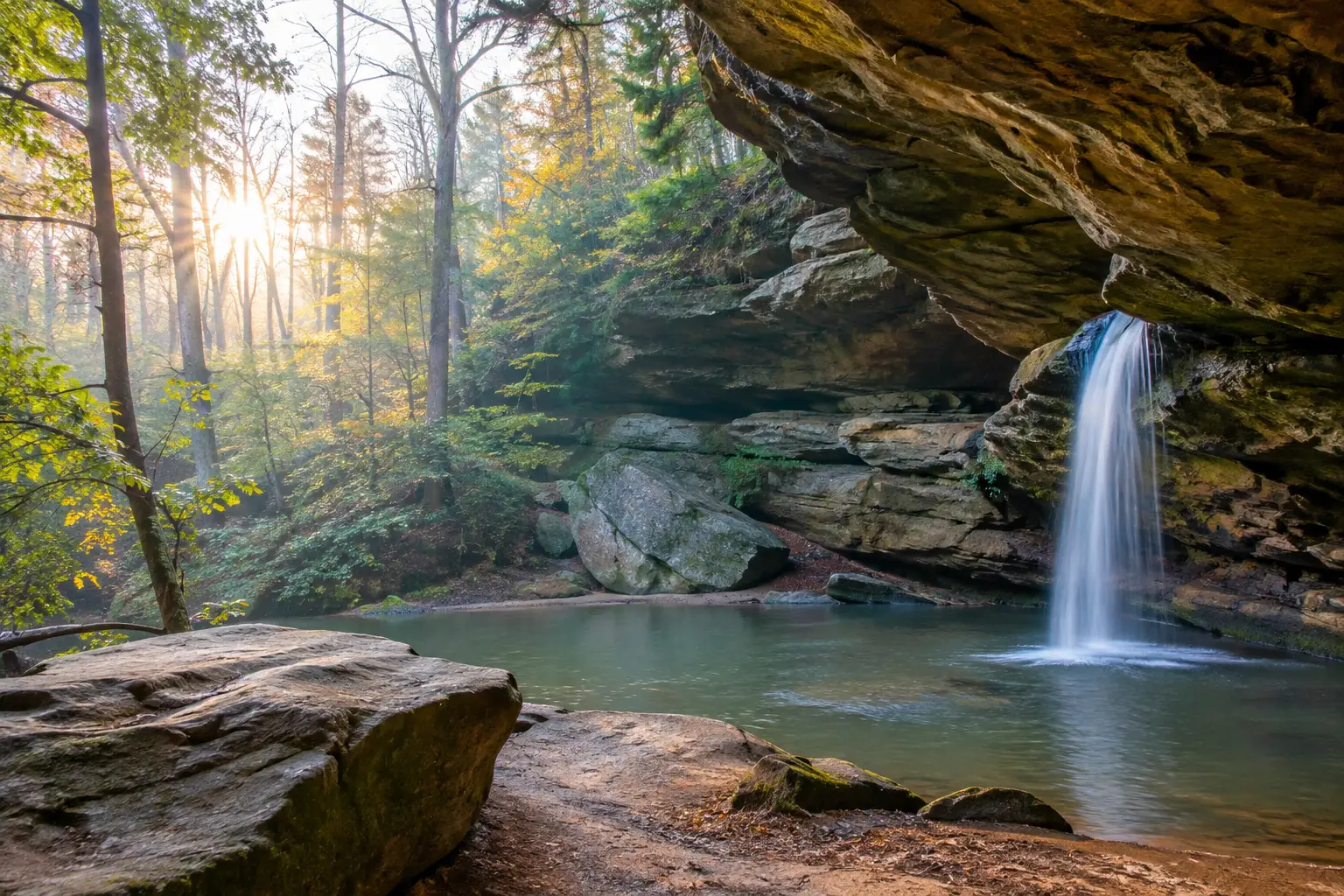
A quiet Hocking Hills trip has a different soundtrack: water moving over sandstone, leaves shifting above the trail, and the soft crackle of a fire after dark. If you are asking when is Hocking Hills quietest, the short answer is midweek in late fall, winter, or early spring. The fuller answer depends on what kind of quiet you want, how much weather you are willing to embrace, and which trails are on your list.
This is a popular place for good reason. Ash Cave, Old Man’s Cave, Cedar Falls, and the surrounding forest feel wonderfully wild, but weekends and peak leaf season can bring plenty of company. With a little flexibility, you can still find the slower, more private version of Hocking Hills many travelers picture when they plan a cabin getaway.
When Is Hocking Hills Quietest?
For the fewest visitors overall, plan a stay from January through early March, avoiding holiday weekends. The scenery is more spare, the air is crisp, and popular overlooks often feel far less crowded than they do in warm weather. A winter morning can be especially peaceful, with bare trees opening up long views through the woods and a light layer of snow making the rock formations feel almost hushed.
Late November through early December is another excellent window. The biggest fall-color crowds have gone home, yet the woods still have that cozy, late-autumn feel. You may have cool or rainy weather, but that is part of the trade-off for quieter trails and unhurried evenings in a hot tub or around the fire pit.
Early spring, generally from late March through April, can also be calm, especially on weekdays. Waterfalls tend to run strong after rain, and the forest begins to wake up without the full summer rush. Muddy paths, changing temperatures, and the occasional gray day are possible, so waterproof shoes and layers make a real difference.
No season guarantees solitude at every landmark. A sunny Saturday can draw visitors in February just as a rainy Tuesday can clear out a trail in October. But if crowd levels are your priority, winter and the shoulder seasons give you the best odds.
Weekdays Make the Biggest Difference
The most reliable way to make Hocking Hills feel quieter is simple: arrive Sunday afternoon and leave Thursday or Friday morning. Tuesday and Wednesday are often the calmest days, particularly outside school breaks and holiday weeks.
Weekend visitors frequently arrive Friday evening, spend Saturday at the major parks, and head home Sunday. That pattern means a Monday morning can already feel noticeably slower, while midweek gives you more room to linger at a waterfall, find parking without stress, or enjoy a restaurant without building your plans around a wait.
For a couples trip, a midweek stay creates a gentler rhythm. You can take your time over coffee, hike when the trail is cool, return for lunch on the deck, then spend the evening under the stars. Families and friend groups can benefit, too, especially when they want a mix of hiking and downtime rather than a packed weekend schedule.
If weekends are your only option, consider checking in on Sunday rather than Friday. You will still have a few days to explore, but the busiest stretch will be behind you.
Skip the Busy Dates When You Can
A quiet trip is less about avoiding an entire season than avoiding its busiest pockets. Summer weekends, especially June through August, tend to be lively. So do peak fall-color weekends, usually from mid-October into early November, depending on the weather. These are beautiful times to visit, but they are not the best choice if your ideal day involves an empty overlook.
Holiday weekends also draw bigger crowds. Memorial Day, Independence Day, Labor Day, and the weeks around spring break can be particularly busy. The period between Christmas and New Year’s may bring visitors looking for a cozy winter escape, too.
That does not mean you should rule out these dates if they are the only time everyone can travel. It just helps to set the right expectation: choose a private place to stay, start hikes early, and save the most popular sites for off-peak hours.
The Quietest Times of Day on the Trails
Even during a busy season, timing your hike well can change the experience. Aim for an early start, ideally arriving at a trailhead shortly after daylight. The first hour or two of the morning is usually the calmest, before day-trippers have finished breakfast and larger groups are on the move.
Late afternoon can be peaceful as well, particularly on shorter trails near your cabin. Many visitors begin wrapping up their day by midafternoon, leaving a quieter window before sunset. Keep an eye on trail conditions and daylight, especially in winter. Hocking Hills paths can be rocky, wet, uneven, and slick with leaves or ice, so a headlamp and solid footwear are smart additions to your daypack.
Midday is typically the busiest time at signature spots such as Old Man’s Cave and Ash Cave. If those places are must-sees, visit at opening hours or later in the day, then use the middle of the day for a relaxed lunch, a scenic drive, or time back at your cabin.
Choose Your Trail With Crowds in Mind
Not every beautiful moment requires the most famous trail. The major landmarks deserve their reputation, but they also attract the most visitors. On a busy day, try visiting a popular site at an off time and reserving the rest of your hiking for less obvious routes, shorter walks, or areas a little farther from the main parking lots.
The goal is not to rush through a checklist. It is to leave room for the small things that make the region memorable: a mossy rock wall after rain, a bird call from the trees, or the way the woods smell on a cool morning. A slower itinerary usually feels more restful than trying to see every named waterfall in one weekend.
Weather Can Be Your Quiet-Trip Advantage
Forecasts influence crowds as much as calendars do. A bright, mild day brings people outdoors quickly, while a light drizzle or a chilly forecast often keeps casual visitors away. If you do not mind damp air and can prepare properly, a weekday after a gentle rain may be one of the most peaceful times to be in the forest. Waterfalls can be more dramatic, and the sandstone and hemlocks take on deeper color.
Of course, quiet is not worth taking risks. Heavy rain can make creek crossings and trails hazardous, while winter ice can turn stone steps slippery. Check conditions before setting out, stay on marked trails, and be willing to swap a long hike for a cozy afternoon if the weather changes. The best getaway plans leave a little room to simply enjoy where you are.
Build a Stay That Feels Private Even in a Busy Season
Sometimes the travel dates cannot move. In that case, choose lodging that gives you space to recharge when the parks are active. A private wooded cabin turns the trip into more than a string of trailhead visits. You can enjoy a slow morning, take the dog outside without searching for a public green space, play a casual game of pickleball or disc golf, and settle into the hot tub after a day on your feet.
At Majestic Woods Cabins, that balance is part of the experience. You are close enough to reach area favorites such as Ash Cave without spending the whole day in the car, while still having a comfortable place to return to when you are ready for quiet. For pet owners, dedicated outdoor dog runs also make it easier to bring everyone along without adding stress to the trip.
A peaceful visit is not always about finding a completely empty park. It is about having enough unhurried moments that the woods feel like they belong to you for a while. Pick a midweek date, start early, let the forecast work in your favor, and leave one evening open for nothing more than a fire, a warm drink, and the sound of the trees.
